


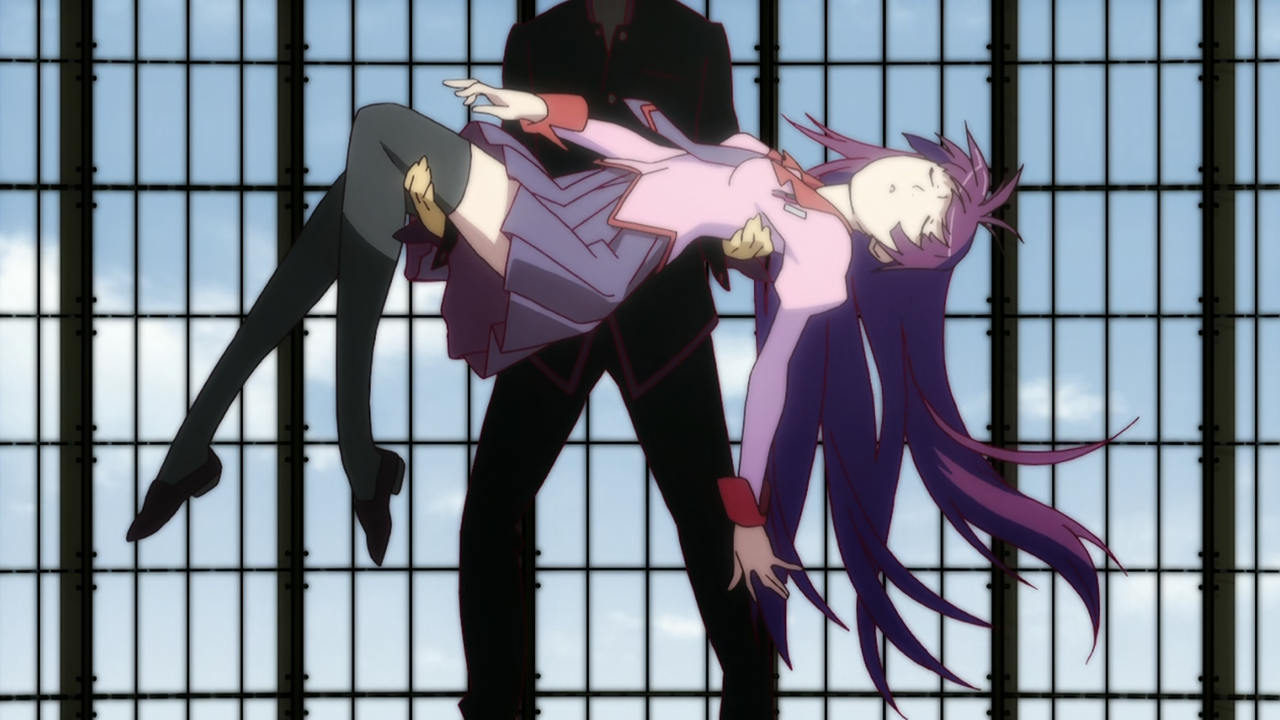

During Anime Central 2025, we spoke with character designer and animator Akio Watanabe for an interview on his process and the struggles with Bakemonogatari.
Watanabe began his career under the pseudonym Poyoyon♥Rock doing character designs for the anime The Soultaker and the eroge visual novel Popotan in 2002. He eventually began working for anime studio Shaft where he became most notable for his designs on the Monogatari series. He is also well recognized for his work on Nurse Witch Komugi-chan, the newest anime entries for Higurashi: When They Cry (GOU & SOTSU), and the visual novel The Fruit of Grisaia.
The artist talked to us in length about the struggles of the early days during Bakemonogatari compared to how things are today for the latest entries to the franchise. Watanabe has led a very inspiring career, check out what he has to say about it!
With the series returning through Monogatari: OFF & MONSTER Season, how has the production process evolved since the days of Bakemonogatari?
Akio Watanabe: When I first started out there were very few visual cues that I could rely on. Frankly there was only the cover. I had to build a lot of things on my own. It was a strenuous process involved for our collective effort to be able to do this. After ten years there has been a notable cumulation of different know-how of the series, so I would say it was a lot easier to go about OFF & MONSTER Season compared to when it was first starting.
What challenges have you faced when working on character designs?
Most of the time I really haven’t felt strained. I just did the best job that I could and the directing team generally agreed and was amiable to what I wanted to do in the character designs. Director Akiyuki Shinbou of the Monogatari series tends to be a lot more demanding pertaining to male character designs as opposed to the female designs so I had to go through multiple retakes for that process.
What was the most challenging arc of Monogatari to work on?
The first series (Bakemonogatari) was the hardest. It was utter hell. There were instances with less than a week of leeway. Times where I was basically slamming together animation in three or four days. It was just impossible. It was not supposed to be possible.
Sometimes it was so bad that the production backbone that incorporates storyboards and timing was not ready when the next episode previews were playing. At the time I thought “oh maybe we’re gonna be pushing the episode back a week or something.” But then we get it two days later… You want me to finish this episode in three days?! This is very difficult to do for several reasons.
During animation production, generally speaking one of the first things you have to nail down is the timing of the audio. This is called “dubbing” in Japan. Once the dubbing is set and done, you do NOT mess with the timing. You just pile on and do whatever you can to fill individual shots because the length of each shot has already been demarcated. It’s just a matter of fill-in the blanks. But this show was so difficult that we had to do multiple dubbings. That entails having multiple audio recording sessions. And why is that the case? Because the voice actors and voice actresses have to project their voices and amp based on visual cues to some degree. They had to resort to making fake storyboards to do that.
Usually you can at least have what’s referred to as “bold”, which is where you only have “character in” and “character out” directions written in bold type. That’s why we call it borudo. That’s the moooost barebones rushed footage you can get, and yet this ended up even worse than that!
To impress upon you how difficult it was: we couldn’t even do multiple audio sessions for it. Each audio session requires different actors and actresses to come together… TOGETHER! In the same studio. At the same time. This is Japan, it’s not a spot recording. So because the production was so late they could not get the actresses and actors to come together at the same time. They actually had to do individual recording sessions and basically jumbled it together like a big puzzle piece. This is something that was unprecedented in Japan at the time. Also there weren’t enough staff members that worked in the animation production process so I had to be the director of animation too. Alone.
So that was the experience for Bakemonogatari, how did that compare to the series directly after?
In the subsequent series we were able to assemble a better staff and crew. It was a lot easier starting from Nisemonogatari to be able to produce. I could concentrate on being the director of animation without having to do everything all at the same time. The situation improved drastically.
Is there anything you can share at this time about your work on Megazone 23 XI?
You might’ve heard about Megazone 23 XI… That production has kind of fallen apart. I did provide some designs because I wanted to participate in it, but as far as I know the financial backing has fallen apart. As I understand it, the rights have been in contest and we’re not even sure who has the copyright control over it.
Did you have history with Higurashi prior to working on the new series?
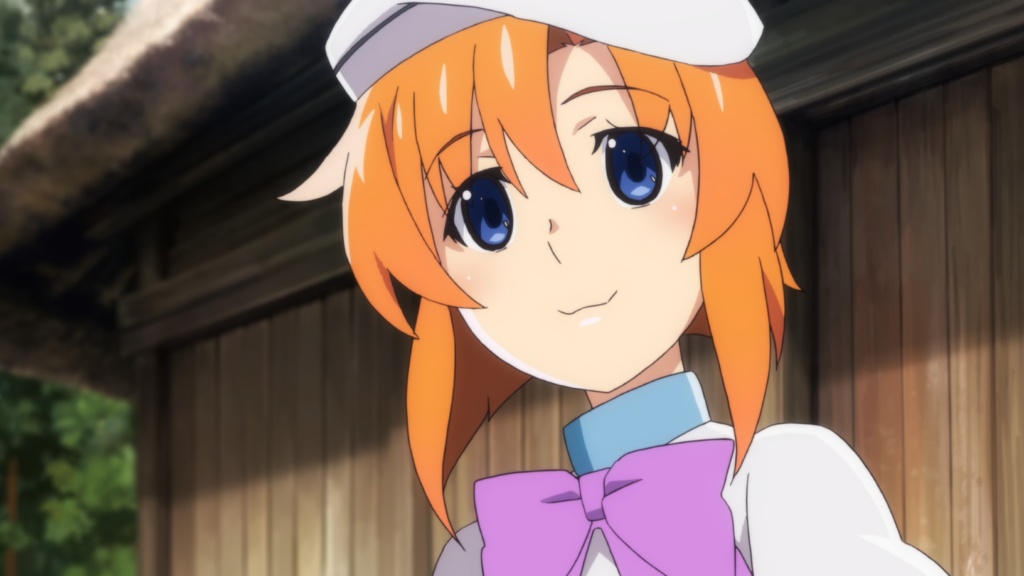
I knew of the doujin game it started as even prior to working on the animation series, so I was very happy about being part of Higurashi GOU and SOTSU. I actually participated in providing some of the key animation for the original anime series as well.
When you’re designing characters, is it important to incorporate some sort of visual cues that make those characters unique?
[NOTE: his interpreter Dan Kanemitsu asked Watanabe this question]
I was taught by Kenichi Sonoda (Gunsmith Cats) that the silhouette, the profile, must be unique so that it is instantaneously recognized. And I agree that it is very important. With my background in fighting games, I enjoyed playing them a lot and the characters are very easily identifiable. That’s an important way of being able to make the characters easily relate and for the audience to enjoy.
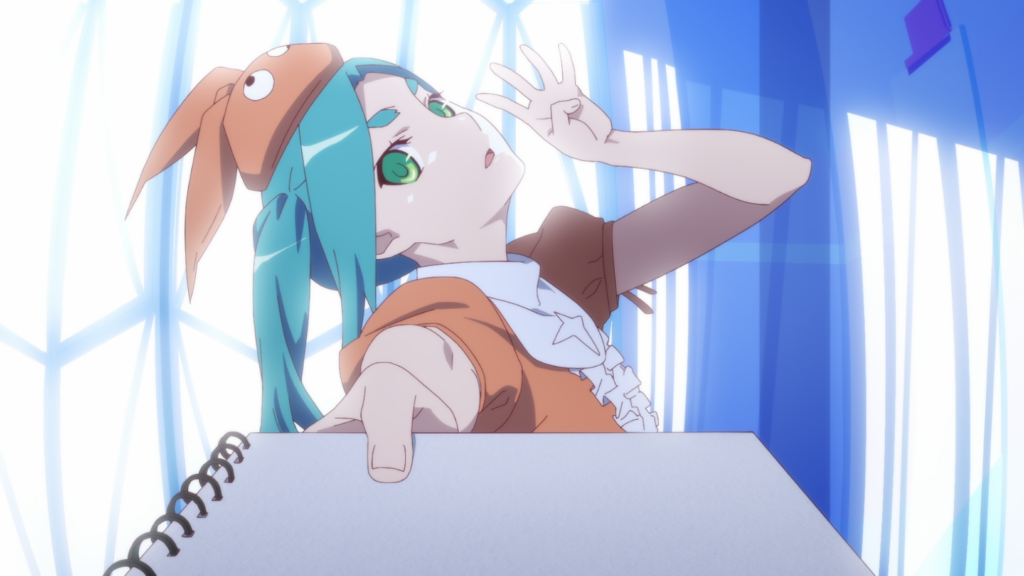
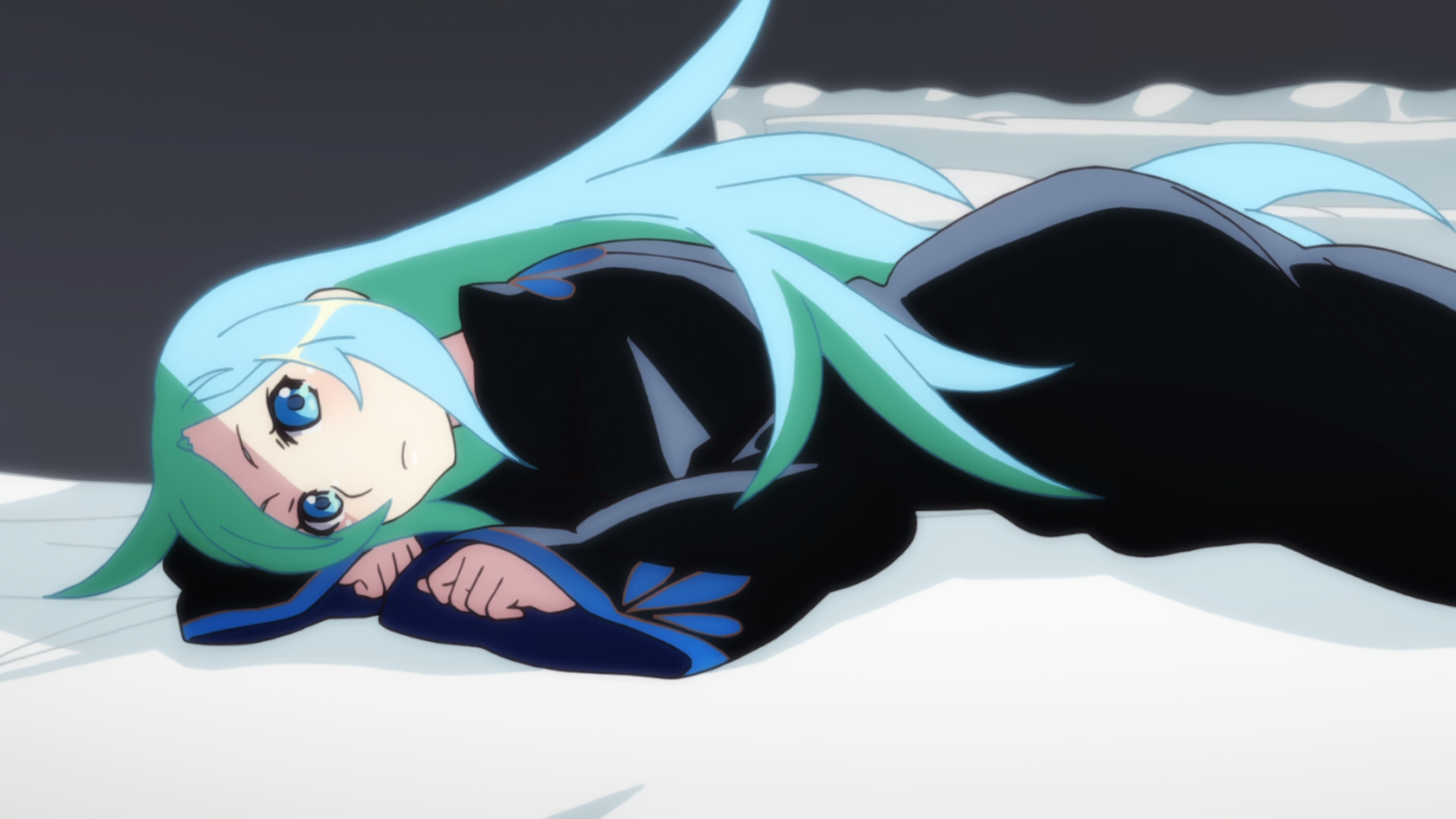
Another thing that I am aware of is to make sure that the hair colors are easily identifiable and distinguishable. In the Bakemonogatari series all the characters are supposed to be brunettes, but if they were then they would all blend together. For that reason I had some of the characters more turn purplish or greenish and such.
How did you view your production of the Kubikiri Cycle (Zaregoto) anime compared to Monogatari given that they’re different works from the same author?
One of the important things I had to keep in mind was that the character designers for the two series were different in the original. That means I had to figure out how to try to maintain that differentiation. With regards to the Monogatari series there’s very few visual cues, so I was able to carve out what I felt was appropriate on my own terms. However with Kubikiri Cycle there was a lot of visual material that had already been published. I had to keep in mind what’s already been shared and appreciated in how I could try to render it.
The original designer for Kubikiri Cycle was Take, who is now the character designer for Mobile Suit Gundam GQuuuuuuX. His art style is quite different from mine. I was under the impression that I needed to adjust my art style to be close to replicating Take for Kubikiri Cycle. However there was another show by the same author called Katanagatari that he did work on. It wasn’t very successful unfortunately. The higher ups felt that Mr. Take’s art wasn’t as exceptional because it wasn’t successful, and that was just a travesty to me. So because of what happened prior with Katanagatari, the higher ups at Aniplex and the director said “well you know it’s Studio Shaft doing this and many people are familiar with Shaft’s Monogatari series, so please push it towards that style.” That’s how it kind of turned into what you see in the end.
Storywise, what’s your favorite Monogatari arc?
The first two volumes stand out because they’re so distinctive and unique. It really hit me like a truck.
Of all your works, what do you think people should start with?
If you can enjoy the back-and-forth between characters I think you’ll enjoy the Bakemonogatari series. That said, I wasn’t deeply involved with it but Kiki’s Delivery Service was something that I really liked more. I was participating in it for over a year. It was hard work at the time. I was really taken aback when I saw the final print and at the staff showing. It’s like “wow I could never imagine I could participate in something so wonderful.”
Do you have any favorite light novels?
I don’t read the isekai stuff too much. Not too interested in it. If it’s to be isekai I’d rather see something more involved like Aura Battler Dunbine. I do like a lot of Tomino’s stuff. And Space Runaway Ideon of course is wonderful.
Are there any series you wish would be adapted into anime?
Right now we’re standing at a stage where a lot of series are turned into animated works. Adaptation of animation is something that is blessed upon a lot of series. When we were growing up, a lot of manga, wonderful manga, was not adapted to anime. Right now I think it would be great for the older series to get their time in the light today, but unfortunately animation production recently seems to cater towards what’s new. Whatever is the new fad in manga and light novels. The older manga are kind of left out and I think that’s a travesty. I think that’s really unfortunate.
If you go back in time prior to the 90s there were a lot of original shows as opposed to manga adapted to anime. It could be that different pressures and different circumstances basically led animation production companies and television networks to avoid shows that were only interesting. They needed something more. There’s a lot of remaking of old animation shows into new ones, and I’m one that would rather just have new anime of manga that has never been animated.
I started the Grisaia anime for the first time recently, is there anything you can talk about regarding that production?
I’m very happy that you’re actually willing to watch the Grisaia anime. Even as someone who did not participate in it, I would have to say that the script is quite good. I’m not the type of person that likes to see a girl holding a gun and just shooting away, but I think it’s well done.
Are there any voice actors that you’re a particular fan of?
The list goes on…(laughs). Although I’m very privy to The iDOLM@STER guests that came here to ACEN (Asami Imai and Eriko Nakamura). I wanted to go to their events.
What advice would you have for new artists looking to improve?
I’m not sure if I’m really in a position to be able to teach young people how to get better. In Japan the people who are still involved in animation, drawing, and illustrating, they are phenomenally good. Much better than myself. They are the only ones that can survive in the industry in Japan at this point. Frankly, if I had jumped in as a creative artist at this point with the skill levels that I had at the time I probably couldn’t cut it.
What lesser known anime would you recommend to the world?
Ashita no Joe (Tomorrow’s Joe) for example is something that I would recommend watching. Director Osamu Dezaki’s works are all wonderful to enjoy. I like a lot of old anime.
Who would you say today are your main inspirations?
There are phenomenally great people that I’m inspired by but the visual fidelity of Japanese animation these days has improved by leaps and bounds. In the industries of both animation and manga we sometimes have an overuse of calories. In other words, a lot of effort has to be expended to put together a work now. It used to not be so hard. Now it is extraordinarily hard. To try to integrate the latest wonderful art trends into my work would possibly buckle the pace at which I work.
If you could send a message to your past self when you were starting off as an artist, what might it say?
I think I’d want to tell my former self to not sweat it as much. Animation is something that I can make a living out of now, but I never thought at the time that I could. So I’d like to give him some confidence.
Location: Anime Central 2025
Interview Date: 5/17/2025
Guests: Akio Watanabe
Note: Interview edited for length and clarity.

